
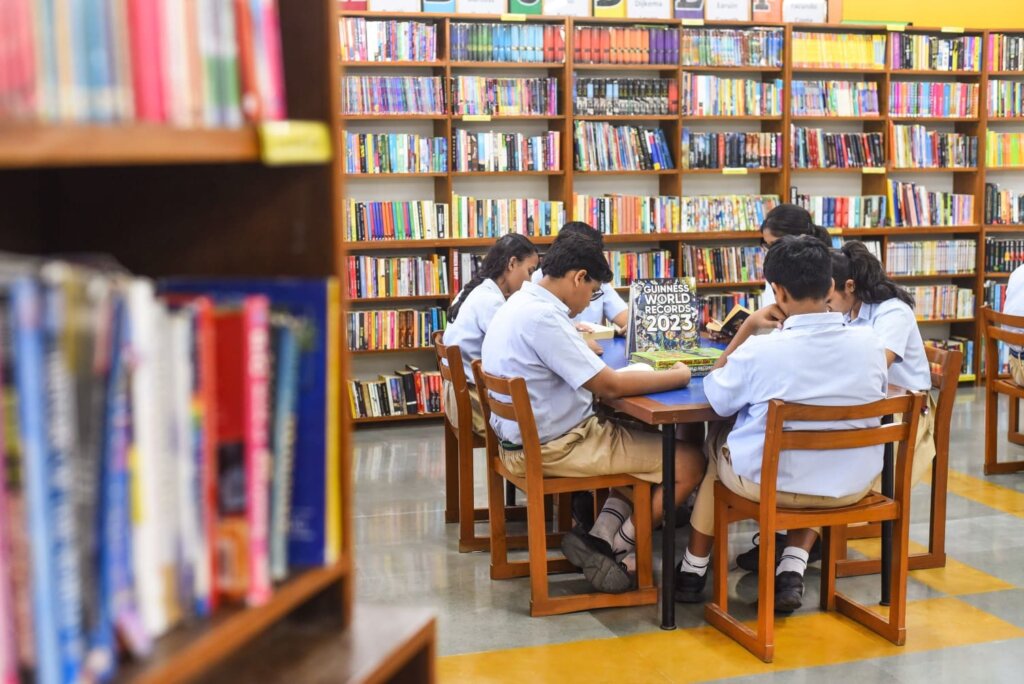
Best ICSE School in Vadodara Nalanda International School believes that simple daily routines help children become confident, responsible and independent learners.
Every parent wants their child to grow into a confident, responsible and independent individual. While academic success is important, the ability to think for oneself, become proactive and make informed decisions is equally valuable. Surprisingly, one of the most effective ways to nurture these qualities is through something very simple. Daily routines.
But what is a routine really? It is a set of activities that happen regularly and in a predictable order. It could be related to school as well as home. Whether it is packing a school bag and ensuring that it is as per the timetable for the next day, completing homework, reading before bed or ensuring that the uniform is in order for the next day, routines help children understand expectations, plan their day properly, and most importantly, take ownership of their actions.
As an international school in Vadodara that continues to uphold core Indian values, we believe that independence may be seeded in the vidya of classrooms but only flourishes when nurtured across every walk of life. Hence, we focus on nurturing a student-centered learning environment where children:
- Manage their learning and time, even if partially
- Build confidence and discipline
- Become self-reliant in their everyday life
These are the qualities that contribute to holistic education and future-ready learning. This is an approach that has helped make Nalanda not just the best ICSE school in Vadodara but also one of the best schools in Vadodara.
Why Routines Matter for Child Development
Children thrive when they know what to expect. Predictable routines create a sense of security and help reduce stress and confusion.
When children follow regular routines, they spend less energy figuring out what to do next and more energy focusing on learning and personal growth. This structure helps them develop self-discipline, a skill that supports them both inside and outside the classroom.
For parents looking for a child development school, it is important to understand that routines are not about strict schedules. They are about creating healthy habits that encourage responsibility and independence over time.
How Routine Teaches Responsibility at One of The Top Schools in Vadodara
A child who remembers to carry their homework, refill their water bottle or organise their study materials is learning accountability in practical ways.
These may seem like small actions, but they teach children that their choices have consequences. Over time, they begin to understand that they are accountable for their own tasks and commitments.
At Nalanda International School, students are encouraged to steer age-appropriate activities. This helps them become active participants in their learning journey rather than be passive passengers waiting for the next milestone.
Building Decision-Making Skills Through Daily Habits
Self-directed learners can make decisions and solve problems on their own. Routines provide children with regular opportunities to practice these skills.
For example, deciding the order in which to complete assignments or planning time for studies and recreation helps children develop judgement and the ability to prioritise tasks.
These experiences prepare them to handle larger responsibilities as they grow older. Such skills are an important part of future-ready learning and contribute significantly to long-term success.
Routines Improve Time Management
Time management is a life skill that benefits children throughout their academic, personal and eventually, professional lives.
A consistent routine helps children understand how to balance different activities during the day. They learn to allocate time for studies, hobbies, sports, family interactions and rest.
As one of the top schools in Vadodara, we believe that effective time management develops naturally when children are exposed to structured yet balanced daily schedules.
Encouraging Self-Motivation
One of the greatest benefits of routines is that they gradually shift motivation from external reminders to self-management.
Instead of constantly depending on parents or teachers, children begin to recognise what needs to be done and take initiative.
This transition is crucial because confident learners are driven by curiosity, self-awareness and personal goals rather than constant supervision. Developing this mindset is a key objective of holistic education.
The Connection Between Routine and Confidence
Confidence grows when children experience success. It could be as small as preparing for class, managing assignments or participating in activities. A checklist where every item is ticked off is a source of immense pride, irrespective of the age of the individual.
More importantly, small accomplishments contribute to stronger self-belief and resilience. When children realise that they can manage responsibilities on their own, they become more willing to try new things and face challenges.
Learning Beyond Academics
True education extends beyond textbooks and examinations. Self-reliant learners are better equipped to navigate everyday situations and adapt to changing circumstances.
Routine-based learning supports the development of life skills such as everyday organisation, effective communication, a sense of accountability, and a feeling of perseverance.
These qualities help children become confident individuals who can contribute positively to their communities and future workplaces.
The Role of Schools in Developing Independent Learners
It may take a village to raise a child, but for establishing routines, parents and the school have significant influence.
At home, parents can establish routines by setting consistent schedules, assigning simple, easy-to-achieve tasks, and encouraging children to complete them independently.
At school, a supportive learning environment provides opportunities for children to make informed choices and manage responsibilities within a safe framework.
At Nalanda International School, we encourage independence while supporting academic excellence through:
- Project-based learning
- Leadership opportunities
- Co-curricular activities
Creating a Balance Between Structure and Flexibility
Think of routines as a framework rather than a rulebook. They provide guidance and reassurance while still leaving room for flexibility and growth.
The goal is not to create rigid schedules but to help children develop habits that support learning and personal growth.
When children understand the purpose behind routines, they are more likely to follow them willingly and benefit from them in the long run.
Small Habits, Big Outcomes
The journey towards independence does not happen overnight. It is built through small, consistent actions repeated every day.
Packing a school bag, completing assignments on time, reading regularly and taking care of personal belongings may appear simple, but together they shape character and mindset.
These habits lay the foundation for lifelong learning and personal success.
Encourage age-appropriate responsibilities, establish consistent routines, allow children to solve simple problems independently, and gradually reduce assistance while offering guidance and positive reinforcement.
Routines create structure and predictability, allowing children to focus on learning instead of constantly deciding what to do next. This improves concentration, organisation and self-discipline.
Surprisingly, children can begin following simple routines from an early age. It could be something like keeping the dishes for washing after they finish or putting back the games in the box when they’re done.
At Nalanda International School, we believe that education should prepare children not only for examinations but also for life. It is our continued commitment to this belief that helps us be regarded as one of the best schools in Vadodara. Through student-centered learning, project-based activities, leadership opportunities, co-curricular programmes and a supportive environment, we encourage responsibility and self-directed growth in our students.
Conclusion
Independent learners are not born; they are nurtured through everyday experiences and consistent habits. Simple routines help children develop responsibility, confidence, decision-making skills and self-motivation. These qualities support both academic success and personal growth.
When parents search for ‘best English medium schools in Vadodara’, ‘best ICSE school in Vadodara’ or an ‘international school in Vadodara’, what they are truly seeking is an environment that supports their child’s overall growth and prepares them for future opportunities.
By combining holistic education with future-ready learning approaches, Nalanda helps students build the independence and resilience needed to thrive in an ever-changing world.

Pingback: Best ICSE School in Vadodara | Why Asking Questions Matter